
The Experience Economy
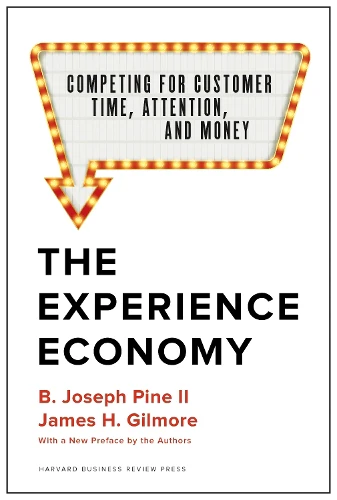
In recent decades, business competition has moved beyond quality, price, and features to focus on creating memorable customer experiences. This trend, called the Experience Economy, was highlighted by Pine and Gilmore. They showed how companies stand out by crafting experiences, like Starbucks’ atmosphere or hospitals prioritising patient comfort. This change is spreading beyond retail, healthcare, and education, underscoring the importance of connecting with customers on a deeper level.
The Experience Economy
If you’re interested in exploring these concepts further, I highly recommend the book "The Experience Economy" by B. Joseph Pine II and James H. Gilmore. Their work lays the foundation for understanding how value creation has evolved and why transformation is the next frontier for businesses.
The Transformation Economy
We are entering a new era: the Transformation Economy. Here, transformation goes beyond delivering an enjoyable experience; it means helping customers achieve lasting change in their lives or work. Unlike experiences, which engage customers and create memories, transformation changes customers at their core. For example, instead of offering fitness classes people enjoy, a transformational business helps customers adopt lasting, healthy habits, seeing themselves as active athletes with internalised behaviour. The stakes are higher, as businesses now shape identities. Its value lies in enabling meaningful change and empowering customers to achieve their aspirations.
In a crowded, fast-moving market, businesses that help customers reach deeper goals and become better versions of themselves earn stronger loyalty, greater differentiation, and long-term growth. This approach isn’t about chasing the latest tech trend. It’s about truly understanding your customers’ aspirations and finding new ways to deliver enduring value. For leaders wanting to rise above the noise, this shift offers a way to cut through complexity and focus on what creates real impact.
The Transformation Economy
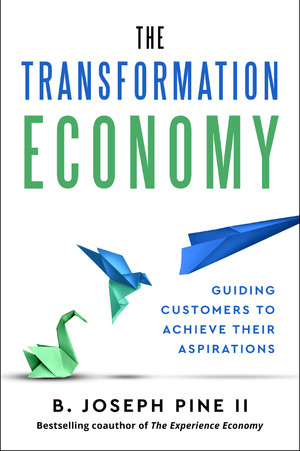
For deeper insight, I recommend "The Transformation Economy," published last month. The book offers practical strategies for organisations to build meaningful customer relationships, discover aspirations, and design offerings that drive transformation.
To succeed in the Transformation Economy, organisations must understand customers’ goals and desired changes. The best way to uncover these is through targeted user research, using methods such as in-depth interviews to reveal motivations, journey mapping to visualise experiences, and observation studies to see real behaviours in context. Organise diary studies and co-creation workshops to help customers articulate aspirations and challenges. Engaging customers with these concrete research approaches enables you to listen, identify deep motivations beyond the product or service, and design offerings that support meaningful transformation. Remember, it’s not about asking people what they want, but about uncovering their needs, desires and aspirations.
Consider these key questions when rethinking your product or service for the Transformation Economy:
What business are you actually in? What transformation do your customers seek, and how does your offering empower them to achieve it? Consider not only the external outcomes but also the new self-story customers hope to tell about themselves as a result of this transformation. What identity shift are they striving for, and how can your product or service help them embody that new narrative?
What lasting change do you enable for your customers?
How can you build meaningful relationships with your customers, so you can better understand their needs and support their transformation?
How can you co-create transformation with customers, making them active participants in their growth?
Embracing the Transformation Economy delivers significant value. It fosters deeper loyalty. For example, fitness apps that help users achieve lasting health changes often see their customers become long-term advocates and community builders. Transformation also opens new opportunities for innovation and differentiation: in healthcare, patient-centred programs that help people manage chronic conditions or improve overall well-being; in education, platforms that help learners master new skills and build confidence; and in financial services, tools that empower clients to achieve financial independence. These all go far beyond transactional relationships, setting themselves apart from competitors.
The impact of these transformational approaches can be measured using metrics such as customer lifetime value, retention rates, Net Promoter Score (NPS), and success stories that reflect customers' actual growth and change. Tracking these indicators helps demonstrate how supporting lasting customer transformation is linked to meaningful business results.
Adopting this approach lets businesses enter uncontested market space, a concept known as the Blue Ocean Strategy. Rather than competing in crowded markets ("red oceans"), organisations that focus on customer transformation create new value propositions, attract new audiences, and make competition irrelevant.
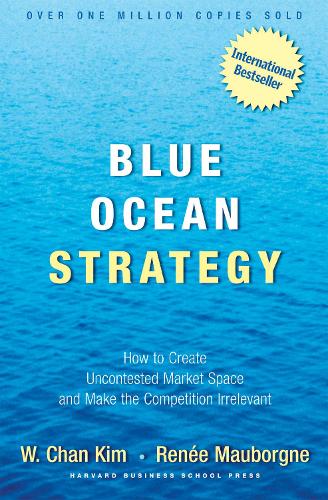
Blue Ocean Strategy
For more, "Blue Ocean Strategy" by W. Chan Kim and Renée Mauborgne is highly recommended.
The Transformation Economy positions your business as a catalyst for positive societal change, inspiring customers to reach their full potential and share their stories with others.
How to get started?
Begin by talking to your customers and asking about their goals, struggles, and successes. Use interviews, surveys, and observation to build a clear picture of what transformation means for them. Involve your team in workshops to map how your product or service could better support genuine change. Start small: pick one area to pilot a transformation-focused change and measure the outcomes, learning as you go.
Common challenges and how to avoid them
A frequent pitfall is treating transformation as just another marketing message rather than a real shift in mindset and approach. Avoid surface-level changes or ‘quick fixes’; customers quickly spot when an offering doesn’t deliver real value. Another challenge is not involving customers enough. True transformation requires co-creation and ongoing dialogue, not just assumptions. Don’t try to do everything at once; focus on steady, meaningful steps and be open to feedback and iteration. Transformation is a journey for both your business and your customers.
How Fruto can help
At Fruto, we help you put the Transformation Economy into action. Our evidence-based design and collaborative process create meaningful change for both your business and your customers.
Take the first step toward making your business truly customer-centric. Reach out today to schedule an informal conversation with one of our senior consultants or contact us to start your transformation journey now.