

At Fruto, we specialise in user and customer experience, supporting organisations through strategy, research, and design. In our work, we see a recurring question: how can user research drive true competitive advantage, especially as the landscape shifts with AI and digital transformation?
I recently shared these ideas at UX Oxford. Watch the talk here for a quick overview before we dive in:
The dimensions of user research
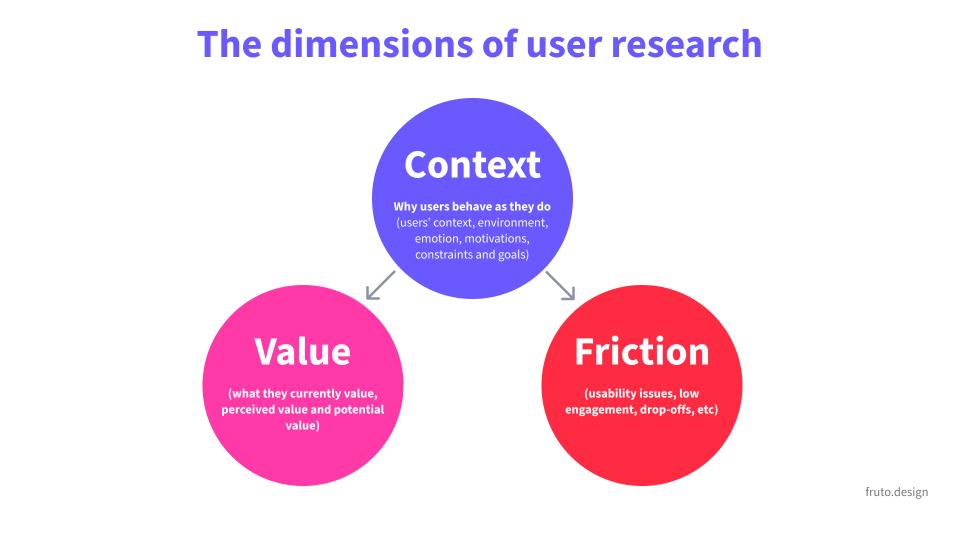
When we talk about user research, I like to break it down into three core dimensions:
Context – This is the foundation of all research. Understanding who your users are, why they behave as they do, their motivations, environments, emotions, constraints, and goals. Context gives meaning to every other insight you uncover.
Friction – Where are users experiencing pain, confusion, or obstacles? Usability issues, low engagement, and drop-offs all stem from friction points. Identifying these often involves methods such as usability testing, analytics, and journey mapping.
Value – What do users and customers truly value? What are their expectations and aspirations? This requires discovery research, interviews, and surveys to get to the heart of customer needs and aspirations.
Most organisations focus heavily on removing friction in the experience, fixing what’s broken. But understanding and amplifying value is just as important. Asking whether we should build something, not just whether what we’ve built works, is crucial for business impact.
Amplifying value and reducing friction
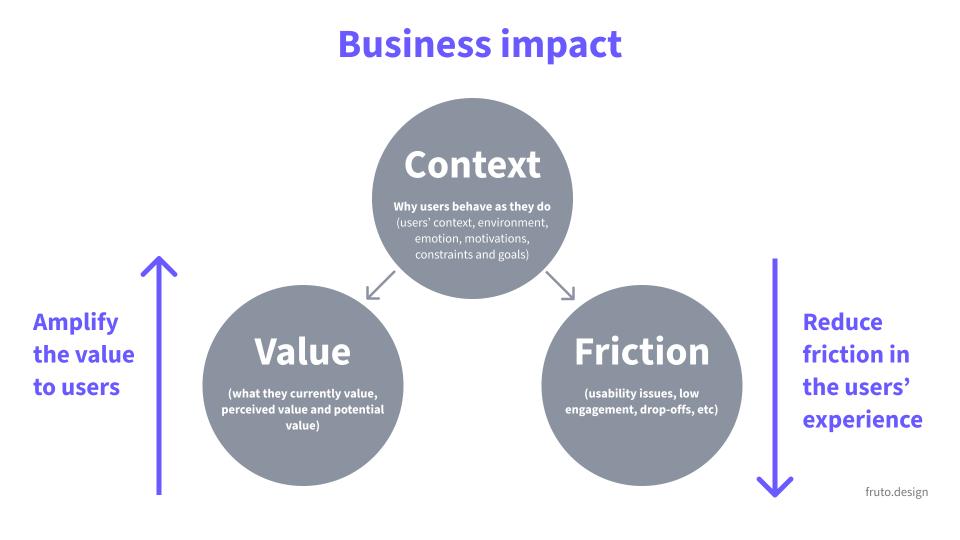
For user research to truly create business impact, we need to:
Amplify value for users and customers
Reduce friction in their experience
Value to users arises from alignment between users' goals and what the product or service enables them to achieve. Friction arises when there’s a mismatch between users’ mental models and your system’s design.
Both evolve over time, so regular research is essential.
From Experience Economy to Transformation Economy
Joseph Pine’s work on the Experience Economy offers a useful lens. Take coffee: at its core, coffee beans is a commodity. Process it and it becomes a good; serve it in a café and it becomes a service; create a unique environment (think Starbucks), and it becomes an experience, and it becomes a premium product.
Now, we’re seeing the rise of the Transformation Economy, where users seek products and services that help them become better versions of themselves. For example, you don’t just go to the gym for the equipment, you go for the transformation you hope to achieve.
Competing in the AI era
As barriers to creating software drop, the question isn’t who can build it, but who can create lasting value and relevance. The winners will be those who:
Deliver exceptional customer experiences
Truly transform their users’ lives
This means mapping not just journeys, but also pain points and opportunities. Tools like service blueprints and customer journey maps help visualise touchpoints, friction, and opportunities for innovation.
Mapping value: The value curve
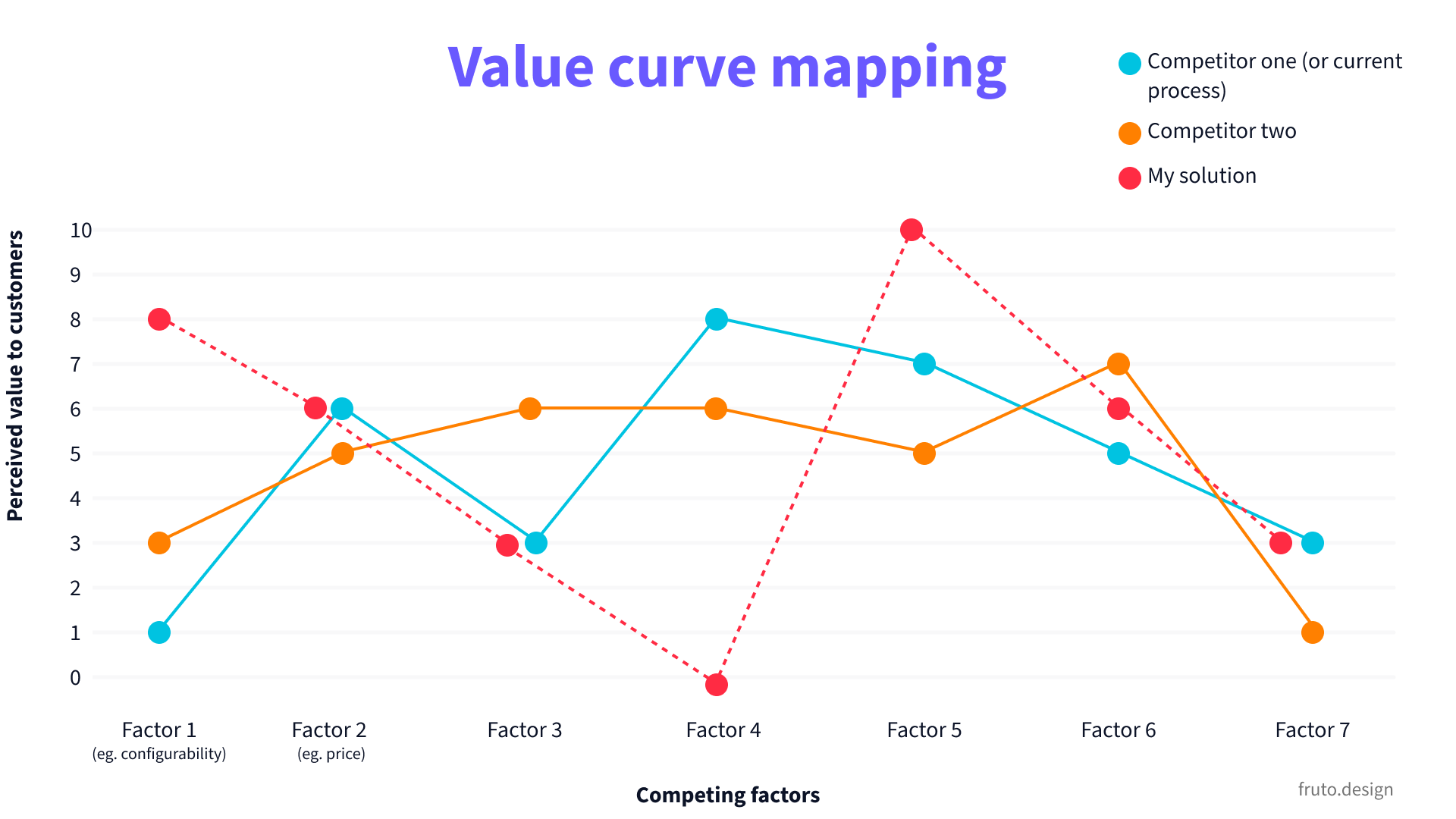
After researching what drives user choices, the Value Curve (from Blue Ocean Strategy) helps you map perceived value across factors, such as configurability and price, against competitors. The key is to decide what to increase, decrease, eliminate, or create to stand out. This exercise helps you find your “blue ocean”, an uncontested market space.
Curious how customer research can help your business?
User research isn’t just about fixing problems. It’s about discovering what matters most to your users and creating experiences that transform their lives. In a crowded market, this is how you drive real competitive advantage.
Curious to learn more or have questions? I’d love to continue the conversation. Get in touch!