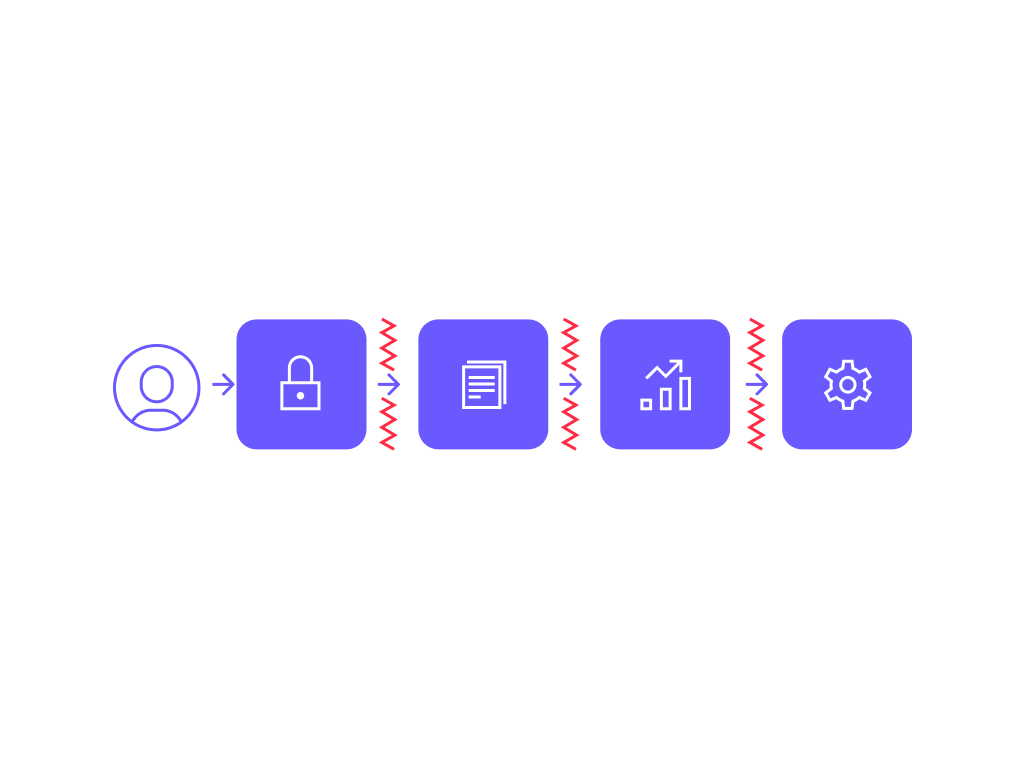

Businesses are under enormous pressure right now. Markets are changing rapidly, customer expectations are rising, and competition is intensifying. To thrive, organisations must adapt, streamline operations, reduce costs, and pursue new growth opportunities.
Advances in technology, especially AI, enable teams to build and launch products faster than ever. The pressure to move quickly is real: product teams are expected to bring solutions to market with speed and agility while staying responsive to evolving customer and market needs.
But a problem arises when speed becomes the objective itself. Moving faster is not the same as making progress.
What is driving the need for speed?
Before rushing ahead, pause and ask a fundamental question: what’s driving the push for speed? There are often valid reasons behind the urgency for speed: market pressures, customer expectations, or business goals. Even when justified, consider whether other approaches, like running multiple workstreams in parallel, might achieve the desired outcome more effectively.
Often, the push for speed comes from market pressures and sales. Customers may request features you don’t yet offer, or there’s a risk of losing business to competitors with stronger solutions. Sometimes urgency stems from investors or shareholders, especially when funding depends on strict deadlines or milestones. There’s also pressure to keep a development team busy, which is understandable from an efficiency and cost perspective but not a reason to sacrifice strategy.
All of these pressures are real, but it’s important to focus on the outcome. Are you trying to delight customers, increase engagement, boost conversion, or prevent lost sales? Your business goal should shape your approach. For example, if sales are driving the urgency, a well-crafted demo or prototype may be enough to support conversations with clients while you build the real solution well. If your development team needs to stay busy, they may have other tasks to complete before starting on the solution, such as technical feasibility studies and set ups.
Be honest about what’s driving the rush and ensure your response addresses the underlying problem, not just the symptoms.
The pressure to get something into the market
We work with organisations under this pressure. Often, there is a strong desire to take an idea to market quickly. As a business owner myself, I understand that temptation. You have an idea, see an opportunity, and want to act.
Why spend months planning when you could build something and see what happens? This thinking is reinforced by being lean, agile, and willing to “fail fast.” But “build, and they [customers] will come” is a fallacy. Many startups and initiatives have failed this way after substantial financial investments.
We all know spending years planning products in isolation, without showing them to real customers early on, is a mistake. But in the rush to avoid that, we sometimes swing too far the other way.
The goal is not to fail. The goal is to succeed.
So perhaps the question we should be asking is not how quickly we can fail, but: How can we succeed faster?
The pressure to keep development teams busy
Another common pressure is the need to keep a development team busy. From a cost and efficiency standpoint, this is valid: having skilled engineers waiting for direction feels like a missed opportunity. However, when teams start development before the solution is properly researched, planned, and defined, they may implement features that do not fully address customer needs or business objectives. This leads to rework, wasted investment, and a product that falls short of expectations.
The most effective approach is to involve development teams early in discovery and planning, leveraging their expertise to shape the solution in early multidisciplinary meetings with Product, UX, and Business, rather than rushing into building. This not only ensures their time is well spent, but also leads to more robust, strategic outcomes for the business and its customers.
The most expensive product mistakes happen before development starts
Technology is a wonderful enabler, but it shouldn’t drive design
Cost of delay versus cost of building the wrong thing
We’ve worked with many organisations that move too quickly into implementation, sometimes skipping discovery and strategic planning and putting the product into the market. The result is often a product that doesn’t meet customer needs, affecting how customers experience your product, brand, and business.
We get involved to help them understand what direction their product or service should take. We step back, look at the problem holistically and in depth, challenge assumptions, identify root causes, and advise on ways to fix it.
We conduct thorough research with their customers or users to understand needs, behaviours, and context. We hold meetings and workshops with their team and stakeholders. We bring evidence into the conversation and use it with our product strategy expertise to clarify direction.
Often, research is a small investment compared with implementing the wrong thing. What is the cost of moving fast in the wrong direction?
“Failing fast” can be expensive.
There is a difference between creating something deliberately as an experiment and releasing something that falls below customer expectations.
If you create something superficial with an unsophisticated user experience that doesn't serve your customers' needs or reflect a real understanding of your users, you might damage your reputation, lose customers, and spend much more fixing the problem.
There is no value in deliberately putting something poor into the market to “fail fast” if it is unlikely to work. You need to give the idea your best shot. That does not mean spending years researching before you build. It means doing the right amount of focused research and strategic work to give yourself a better starting point.
How realistic are your timelines?
One risk of setting unrealistically short timelines is that teams make tactical decisions just to meet the deadline instead of working strategically. When the deadline inevitably shifts, teams often focus on short-term fixes, leading to a patchwork solution with gaps, missed opportunities, and a need for rework. By setting a realistic timeline from the start, teams can plan strategically, make better decisions, and deliver a more robust and valuable outcome.
The right amount of research and strategic planning
Research can be mistaken for slow and progress-delaying, but it doesn't have to be. The key is to do the right research for your questions and decisions.
That might mean running focused discovery research with target users, digging deeper into a specific customer problem, or testing assumptions that could affect the product's direction before finalising the solution. The important thing is not to jump from an idea straight into implementation without first understanding what is worth pursuing.
Research gives you evidence. Strategy gives you direction. Together, they help you move with more confidence and better position you to decide what to build and why.
Be ready to discover the unexpected
While research helps answer specific questions, it’s important for teams to stay open-minded throughout the process. Often, research uncovers gaps, needs, or opportunities beyond the original objectives. For example, you might learn about a workaround your customers use with a competitor that opens an opportunity for a new offering, or find you need to improve your service and operations to better serve customers.
Instead of ignoring these findings, teams should consider them and, when appropriate, shift focus or strategy. Deciding how far to go with these discoveries is a business decision. Sometimes the right move is to stay focused on the original question; other times, real business transformation comes from following up on what you didn’t expect to find.
Some of the best innovations happen when teams are open to the unexpected.
To succeed, give yourself a better starting point
As technology makes it easier and faster to build, organisations that succeed will not necessarily be the fastest, but those that understand customers best and deliver a better customer experience than competitors.
At Fruto, we help organisations combine focused customer research, product strategy and consultancy to make better decisions and move forward with confidence. Reach out to us for a chat about how reactive decisions are affecting your business or product growth.