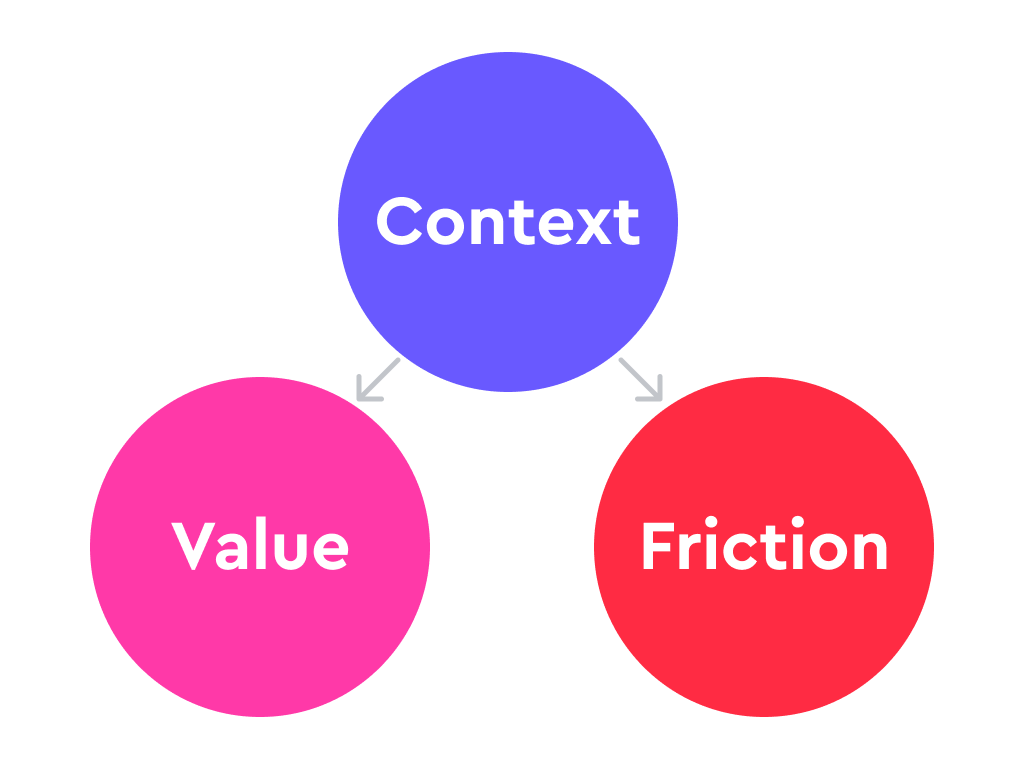

Organisational silos and internal complexity directly affect customer experience, causing friction, duplicated effort, and inconsistent journeys. This article explains why fragmented structures lead to visible failures in the end-to-end customer experience and argues that product-level fixes alone are not enough; organisations must address underlying issues. Key recommendations include establishing shared ownership for the customer journey, auditing the full experience through user research, and ensuring teams align behind a holistic vision. These practical steps enable leaders to create a more connected, valuable and seamless experience for customers.
Customers experience your organisation as one business, even when your products, platforms, systems and teams operate independently. They do not see, nor should they need to navigate, the different teams, systems, or priorities behind the scenes.
As organisations grow (whether large enterprises or fast-growing startups), complexity naturally increases. New products, platforms, and teams are added to serve customers in more sophisticated ways. In many ways, that growth is positive and reflects success. But as organisations develop more robust business strategies and technology infrastructure, the overall customer experience can sometimes deteriorate.
It often happens because complexity scales faster than a cohesive experience.
Why fragmentation happens: The silo effect
In large, multi-product or multi-platform organisations, fragmentation is rarely caused by a lack of internal expertise or effort. Instead, it is a structural byproduct of how teams are organised.
In these organisations, platforms, products, or features are often overseen by entirely distinct teams. Each product team operates with its own set of priorities, KPIs, and timelines, which sometimes conflict with those of other groups across the organisation. Meanwhile, separate development teams build and maintain independent codebases and technology stacks, often resulting in inconsistent interaction and interface patterns.
As organisations grow and systems scale, dividing labour is necessary. You need structure. You need ownership. You need specialist teams who understand particular systems, customer groups, regulatory requirements or technical constraints. For example, internally it may make sense for one team to own login and authentication, another to own document submission, and another to manage reporting. However, the problem starts when these teams begin to work in complete silos. Without a single leader or team responsible for end-to-end coherence, gaps between teams emerge in the customer journey, as customer experience inevitably mirrors organisational design.
From a customer’s point of view, their journey is about accomplishing a specific goal or task. They shouldn't have to notice when they are being passed from one platform or team's domain to another.
This issue isn’t limited to any single industry. We see this problem everywhere, from healthcare, education, and publishing, to B2B enterprise and government platforms.
For example, consider a typical journey that may span multiple internal systems:
Phase 1 (Login & Authentication): The user signs in.
Phase 2 (Submission): The user fills out a form or uploads some documents.
Phase 3 (Reporting/Assessment): The user checks the status or reports on those documents.
Even though this is one continuous journey for the customer, internal fragmentation makes itself visible through jarring and disconnected experiences, such as:
Credential re-entry barrier: The user logs into an application, clicks a button to perform a related task, and the system asks them to log in again because they have crossed an internal architectural boundary.
Duplicate information entry: A user enters key details in one part of the system, only to be forced to enter the same information again in a later step. This may happen because different internal teams' databases and technical infrastructure differ and their back-end systems don't communicate.
Patchwork user journey: When teams realise a transition is incredibly fragmented, they often build clunky, temporary workarounds, such as a dedicated landing page filled with direct links, serving as a literal band-aid over a broken journey.
Technology is meant to make processes smarter and more seamless, not clunkier and more repetitive.
The commercial impact of fragmented customer journeys
Internal fragmentation is more than a design nuisance for customers and users; it also carries significant, measurable commercial consequences for the organisation.
Poorly joined-up experiences can drive up customer churn rates, lower customer satisfaction scores, and spike support costs. For example, a fragmented journey often results in higher volumes of support tickets and increased operational overhead, while confusing or inconsistent experiences can directly impact loyalty and repeat business. This is an expensive problem, and organisations may keep investing in new developments or workarounds when the real issue is a lack of coherence.
Operational inefficiency: When teams operate in silos or without clear coordination, they often duplicate work, face delayed decision-making, and lose momentum on innovation. As a result, the organisation cannot fully leverage its collective expertise and resources, leading to wasted time, higher costs, and missed opportunities to deliver value. This inefficiency undermines the organisation’s ability to compete and adapt in a fast-changing market.
Increased customer support burden: A confusing or fragmented customer experience leaves users unable to complete basic tasks on their own, driving up support requests for issues that should be self-service. This not only inflates operational costs and strains support teams, but also prevents customers from experiencing the product’s full convenience and ease of use, diminishing the perceived value and trust in the brand.
Underutilisation of product offerings: When the user interface is too clunky, or the customer journey is fragmented, users struggle to find and use existing features. As a result, the product fails to showcase its full value, and customers may believe it is less capable than it actually is. This perception gap means that much of the product's potential impact remains hidden, leading to missed opportunities for both the customer and the business.
Misaligned sales narratives: Without a truly cohesive product experience, sales teams often resort to building tailored, polished demos that present an idealised version of the solution. This creates a gap between the promise and the reality, as customers are sold on the product’s potential rather than its actual capabilities. When the delivered experience falls short of expectations, the product appears less valuable and trustworthy, jeopardising long-term relationships and damaging the company’s reputation.
When product leaders notice these disconnected experiences, the instinctive reaction is often to redesign the product experience they are responsible for. However, fixing usability or interface issues in isolation (without addressing the organisational root causes) simply shifts friction to other parts of the journey. When each team optimises its own domain without a shared view of the whole, the result is often added complexity, fragmentation, and ultimately a more disconnected customer experience.
The root problem sits in how the organisation works across teams, systems, and decision-making structures.
When the organisation fails to address fragmentation, complexity continues to grow, compounding inefficiencies and widening communication gaps. This escalation drives up operational costs, slows time to market, and can ultimately necessitate an expensive restructuring to restore alignment.
How to address fragmentation in customer experience
Having explored the causes and impacts of organisational fragmentation, we now turn to practical ways to address the issue.
Creating a more coherent customer experience doesn't mean every team needs to work the same way, or every platform needs to look identical. It requires enough shared understanding, direction, and responsibility for the experience to feel connected where it matters.
Here is how to approach it:
Start by identifying where fragmentation occurs through in-depth discovery research.
Use robust customer and user research methods, such as interviews, shadowing, and usability testing, to map how real users experience the service as they try to accomplish their goals. Pinpoint exactly where users face repeated information requests, inconsistent language, or disjointed transitions in their journey. This discovery process will uncover the roots of fragmentation and provide critical insight into how users adapt or work around these challenges in practice.
For example, in our work with Taylor & Francis, we conducted extensive user research, including interviews, surveys, and user journey mapping, to uncover fragmented experiences in the onboarding process for journal authors.
Map the end-to-end customer journey
Building on your discovery research, create a detailed map of the entire customer experience and the internal systems that support each stage. This mapping exercise makes fragmentation visible, highlights where internal processes fail to support a seamless journey, and reveals clear opportunity areas for improvement.
Focus on high-impact pain points
Start by identifying the areas of fragmentation that most disrupt the customer journey—such as repeated information requests, inconsistent interfaces, or problematic handoffs between teams. To prioritise where to act, we like to use an impact vs effort matrix, which helps surface the opportunities that offer the greatest value for the least complexity. It’s tempting to focus all your attention on building new features, but this can allow gaps in the overall customer experience to widen over time. Product development shouldn’t—and won’t—stop, but it should run in parallel with actively strengthening and refining the end-to-end journey. By allocating priorities across both new developments and experience improvements, you’ll ensure the customer journey gets better with every release, not just the feature set. This ongoing, iterative approach keeps your growth sustainable and your experience cohesive.
Adopt an evidence-driven, user-centred mindset
Move away from intuition-led or siloed decision-making and focus on understanding real user needs through research. Customers organise their experience around the tasks they are trying to get done, not internal teams or technical capabilities.
For example, our embedded UX partnership with Dr Frost Learning helped shift decision-making from intuition to an evidence-based, user-centred approach. This research-driven mindset empowered the team to deliver a more impactful platform and achieve strong adoption of their new GCSE revision tool.
Ensure end-to-end customer experience (CX) ownership
When organisations are structured around specific platforms, it’s essential to assign clear responsibility for joining up the customer experience across all internal boundaries. Senior leadership should play an active role, appointing a customer experience (CX) lead to champion the entire journey, or establishing a steering group with representatives from all key business areas to drive alignment and accountability. Appointing a dedicated executive sponsor gives cross-functional initiatives the visibility and authority needed to break down silos and empower teams to act on customer insights.
Consider how your teams are organised
While teams are often split by technical capabilities or platforms, reinforcing silos and fragmentation and less user-centred, it can be more effective to organise teams around customer journeys, key experience stages or user groups, giving each team responsibility for a complete segment of the journey or for a customer group. However, this approach alone won’t eliminate fragmentation. True progress depends on maintaining a strong, joined-up end-to-end experience and ensuring all teams are aligned around the customer.
Measure impact
Track progress by monitoring improvements in cross-team collaboration, reductions in duplicated work, and greater consistency across the user experience. Include delivery speed for multi-team projects and gather regular feedback from both users and staff to ensure changes have a meaningful impact. Use these metrics to guide continuous improvement and showcase the value of joined-up efforts.
Improving the product experience is about understanding what needs to change behind the product. This is exactly where we help organisations: by looking at the end-to-end customer experience, identifying where fragmentation happens, and helping teams build the alignment needed to create a genuinely coherent journey.
Customers don't experience your internal structure; they experience its result. And if your organisation is fragmented, your customer experience will be too.
You don’t have to do this alone
We help product leaders turn fragmented experiences into cohesive, high-impact journeys, aligning teams and strategy for sustainable product growth.
Fragmentation is one of several challenges that can hold organisations back; legacy ways of working, limited customer insight, reactive product decisions, and product complexity are common barriers.
Addressing these interconnected challenges alongside joining up the customer experience helps create the foundation for sustainable, customer-focused product growth.
Get in touch to discuss the challenges you're facing and ways we could help.